
SNAP Enrollment Fell by 62,770 in Connecticut: Who Is Affected and Where to Get Help
The drop was larger than the state projected. New federal work rules explain part of it, and a notice from the state is the place to start.
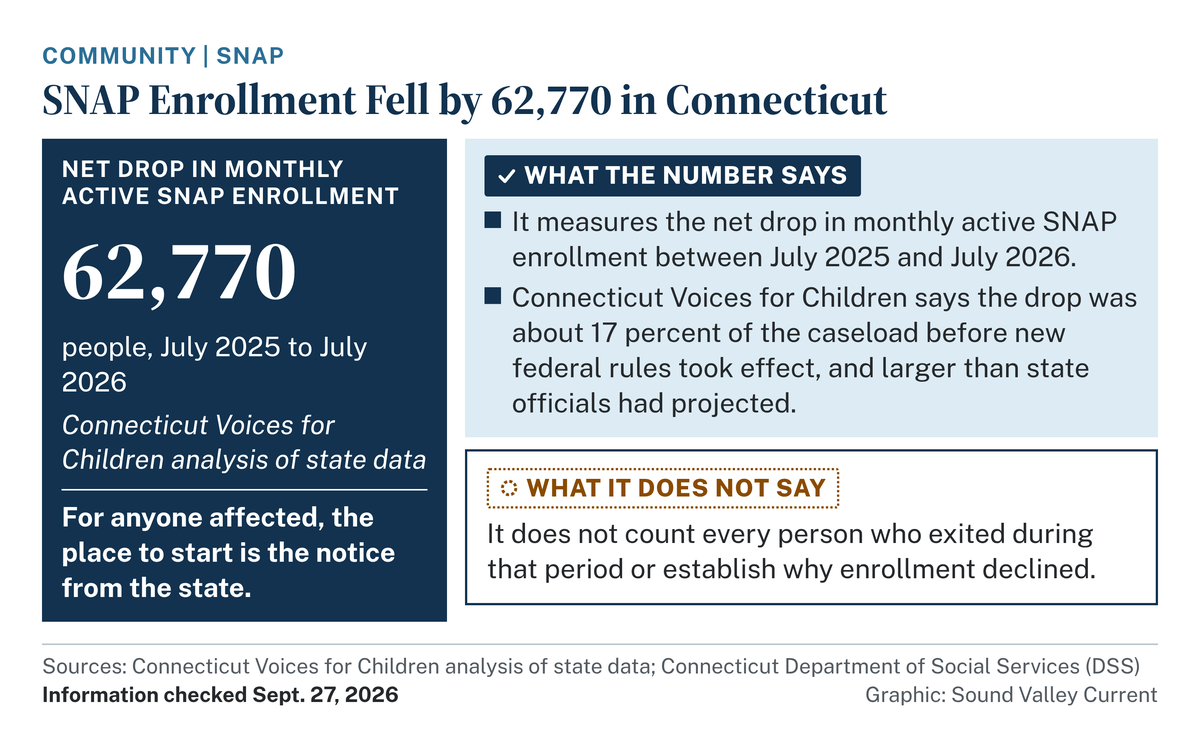
Connecticut’s SNAP enrollment fell by 62,770 people between Jul. 2025 and Jul. 2026, a 17.5 percent decline, according to Connecticut Voices for Children. The drop was larger than state officials had projected.
The figure is the difference between two monthly caseloads, not a count of everyone who left during the year. It also cannot explain why any one person’s benefits changed. For that, start with the notice from the state.
State officials had projected that 24,000 to 36,000 residents could lose access to benefits, according to the analysis. Connecticut Voices estimated that the annual loss would exceed $155 million in SNAP benefits.
Who Is Affected by the New Rules?
Congress expanded SNAP’s work rules in the federal budget law it passed in Jul 2025. Connecticut began applying them statewide Nov. 2nd, 2025. The state Department of Social Services, or DSS, says the time limit applies to most adults ages 18 through 64 who can work and do not live with a child younger than 14.
For people in that group, benefits stop after three months in any 36-month period unless they meet monthly work or training requirements or qualify for an exemption. DSS lists exemptions for a physical or mental health issue, pregnancy, certain caregiving, having applied for or receiving unemployment benefits, some students and other circumstances. DSS determines whether an exemption applies in each case.
I Got a Notice. What Should I Do?
Under the new rules, the work of proving eligibility falls on the person who needs the benefit. Read the notice closely. It should say why benefits changed, when the change takes effect and how to ask for a review or a hearing. The records a person needs depend on the reason in the notice, such as the three-month limit, a missed renewal, a household change or an income decision.
Deadlines can be short. If DSS used incorrect information about work hours, household members, health, or an exemption, keep the notice, gather records, and contact DSS or a trained helper at a community agency right away. Keep copies of what you send and a record of when and how you sent it.
Can a Pantry or Community Agency Fix My Case?
No. Only DSS can approve or restore benefits. A pantry, advocate or community action agency can help with paperwork, and a pantry can help fill a gap while a case is reviewed.
What Is the $300 Grocery Card?
The one-time $300 grocery cards are limited to adults who lost SNAP under the federal three-month rule after Dec 1ST, 2025. To qualify, a person must no longer be receiving SNAP and must have received a DSS notice saying they reached the limit. DSS says community action agencies began distributing the cards Aug. 4th. Call before going because supplies can vary.
The card is one-time help. It does not replace monthly benefits or settle a dispute over a case.
Where Do I Start?
The DSS SNAP pages explain eligibility and work rules. The DSS Benefits Center, 1-855-626-6632, can answer questions about a case. Connecticut 2-1-1 can connect residents with food pantries, meal programs and application help. Dial 2-1-1 or visit 211ct.org. In the lower Naugatuck Valley, the community action agency may depend on the town; 2-1-1 or the state’s agency directory has current locations and hours.
If you still receive SNAP, open every renewal notice, report required changes and keep copies of what you send.