
Connecticut Approves 15.1 Percent Average Increase for Small-Business Health Plans in 2027
The state trimmed insurers’ requests, but small employers, and often their workers, still face another year of rising costs. What any one company pays depends on its own renewal.
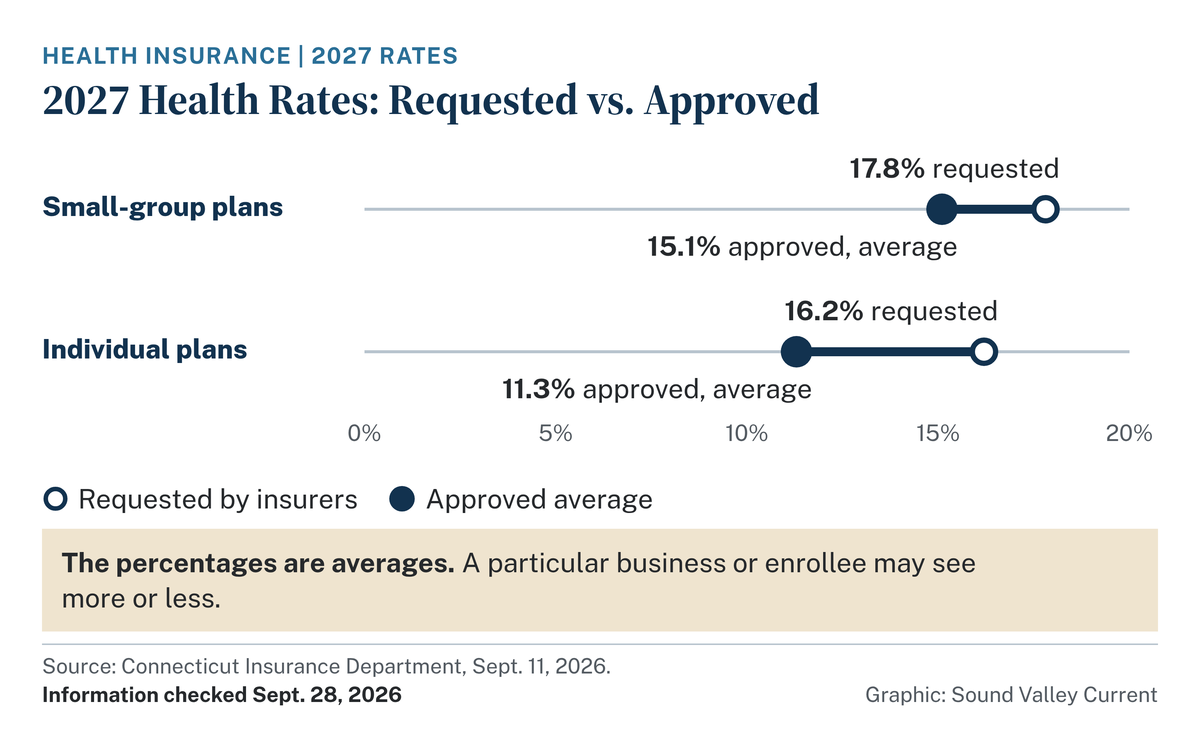
Health insurance for Connecticut’s small businesses will cost more again next year. The Connecticut Insurance Department announced Sep. 11th that it had approved an average increase of 15.1 percent for small-group plans in 2027, down from the 17.8 percent insurers had requested.
In the individual market, the department approved an average increase of 11.3 percent, below the 16.2 percent requested. About 220,000 residents are covered by the fully insured individual and small-group plans in the review.
The department reviewed five filings from four insurers. It said its decisions cut more than $100 million from projected premiums compared with what insurers sought and limited their assumed profit to less than 1 percent of premiums. Rate review cannot solve rising health care costs on its own, the department said.
What Will My Company Pay?
The 15.1 percent figure is an average across the approved filings. A particular business may see more or less, depending on its insurer, plan design, covered employees and dependents, rating area and renewal date. Changes to deductibles, copayments, prescription coverage or provider networks can also change what the coverage is worth.
The renewal packet shows what a business and its workers will actually pay.
Does the Increase Apply to Every Employer?
The review covers fully insured individual and small-group plans sold on and off Access Health CT. It does not cover self-funded employer plans, which fall under federal law. In those arrangements, the employer bears the claims risk and may hire an insurer or administrator to process claims, so the insurance card may still carry a familiar company name. A broker or plan administrator can say which kind a business has.
Medicare Supplement plans are also outside the review.
What Should I Ask at Renewal?
- What is the total premium change, and what is the separate dollar change for the employer and for employees? A percentage can hide the effect on a family tier, and an unchanged employer contribution can shift most of an increase to workers.
- How do the benefits compare? Check deductibles, out-of-pocket maximums, prescription rules and provider networks, not just premiums.
- Does the proposal change the employer’s contribution? A lower-cost plan can still cost employees more if cost sharing changes.
- What is the deadline to accept or change the renewal? Small-group renewals do not necessarily follow the individual-market calendar.
Is There Another Option?
For some employers, perhaps. A new state tax credit is available to eligible businesses that offer an Individual Coverage Health Reimbursement Arrangement, or ICHRA, instead of a traditional employer-provided health plan. The arrangement must be offered through Access Health CT’s BusinessPlus platform. The Department of Revenue Services describes the limit as fewer than 50 Connecticut employees on the application date, while Access Health CT says 50 or fewer. A business with exactly 50 employees should confirm eligibility before relying on the credit. The credit can be worth up to $1,000 per covered employee for each of the first two consecutive income years the employer offers the arrangement. The statewide credit pool is capped at $5 million in any income year, and applications are considered on a first-come, first-served basis.
Under an ICHRA, the employer sets a monthly contribution that eligible employees can use toward individual health coverage. It is a different way to offer coverage, not a discount on small-group rates. Employers considering a switch will want to compare worker affordability, plan choice, contributions and administrative requirements.
What About Individual Coverage?
Access Health CT says open enrollment for 2027 individual coverage runs from Oct. 23rd through Jan. 15th. The Connecticut Insurance Department’s Jul. 15th notice instead lists Dec. 23rd as the closing date. Access Health CT says the federal change affecting the enrollment period is being challenged in court, so consumers should confirm the current deadline at AccessHealthCT.com before enrolling.
Those dates apply to people shopping for individual coverage, not an employer’s small-group renewal.