
Still Quacking After 21 Years: Why Duck Day Remains One of the Valley’s Favorite Traditions
Few community fundraisers combine civic spirit, family entertainment, and outright absurdity quite like a duck race.
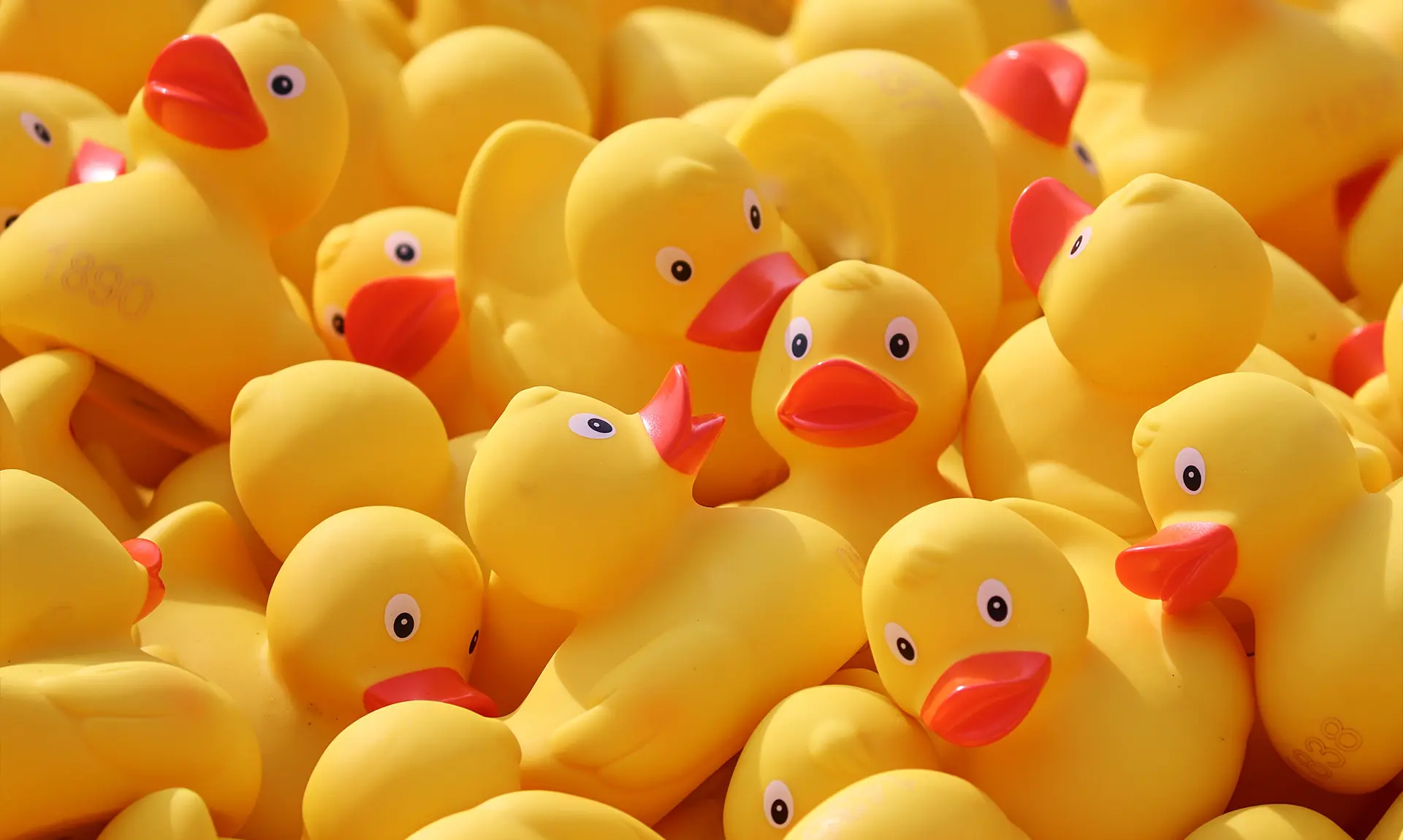
Earlier this month, thousands of bright yellow rubber ducks once again poured into the Naugatuck River from Whittemore Bridge during the 21st Annual Duck Day & Duck Race Festival, transforming downtown Naugatuck into a celebration of community, charity, and good old-fashioned fun.
Long before the first ducks hit the water, Maple Street had filled with food vendors, local merchants, live entertainment, children’s activities, carnival attractions, bounce houses, obstacle courses, and the ever-popular Corporate Duck Dash. Families lined the streets while thousands of spectators gathered along the riverbanks to cheer on their adopted racers.
What began more than two decades ago as a quirky fundraiser has evolved into one of the Naugatuck Valley’s signature events.
Organized by the Naugatuck Chamber of Commerce, Duck Day routinely attracts more than 5,000 visitors while raising money for nonprofit organizations throughout the region. Since its inception, the event has generated more than $370,000 for local charities.
“This is one of those uniquely Valley traditions that brings everyone together,” Chamber officials have said.
Local nonprofits sell race tickets throughout the spring and receive a portion of the proceeds, making Duck Day both a fundraiser and a community celebration.
The Valley’s Biggest Duck Race
Over the years, the Naugatuck event has become the region’s premier duck-racing spectacle, attracting participants not only from Naugatuck but from neighboring communities including Ansonia, Derby, Seymour, Shelton, Beacon Falls, Prospect, Oxford, and Middlebury.
Residents “adopt” ducks before race day, with each duck assigned a number corresponding to potential prizes. At race time, thousands of ducks are released into the river, where the current carries them downstream toward the finish line.
For many families, however, the race itself is only part of the attraction.
Throughout the day, visitors enjoy music, food trucks, games, and entertainment. Children dash between bounce houses and obstacle courses while adults browse vendor booths and reconnect with neighbors. Local businesses sponsor activities and community organizations use the festival to introduce themselves to residents.
The atmosphere is equal parts hometown reunion and summer festival.
A Connecticut Tradition
Naugatuck may host the Valley’s best-known duck race, but similar events have become fixtures in communities throughout Connecticut.
Earlier this year, the Milford United Way Duck Race once again brought thousands of spectators to Milford Harbor. Participants adopted up to 10,000 ducks, supporting programs focused on food insecurity, housing stability, mental health services, and educational initiatives.
Meanwhile, approximately 20,000 rubber ducks took to the Pawcatuck River during the 26th Annual Pawcatuck River Duck Race, one of the largest events of its kind in New England. Proceeds support schools and nonprofit organizations in both Connecticut and neighboring Rhode Island.
The continued popularity of these events may seem surprising in an era dominated by digital entertainment and online fundraising.
Yet organizers say their success stems from something simple: they are fun.
Unlike many charitable events, duck races appeal equally to children and adults. A five-dollar duck ticket creates just enough suspense to make the race exciting, while the sight of thousands of identical yellow ducks floating down a river is both memorable and refreshingly local.
More importantly, the races remind communities that fundraising does not always have to be formal or serious.
For one afternoon each year, rivers become racecourses, downtown streets become festival grounds, and thousands of identical rubber ducks become competitors in one of Connecticut’s most whimsical traditions.
And perhaps that is why Duck Day has endured.
At a time when many interactions take place online and community life can sometimes feel fragmented, thousands of people still gather each June to cheer on pieces of floating plastic.
On paper, it sounds ridiculous.
In practice, it has become one of the Valley’s most beloved traditions.
And judging by the crowds that once again lined the riverbanks this year, Connecticut’s appetite for rubber ducks shows no signs of floating away anytime soon.